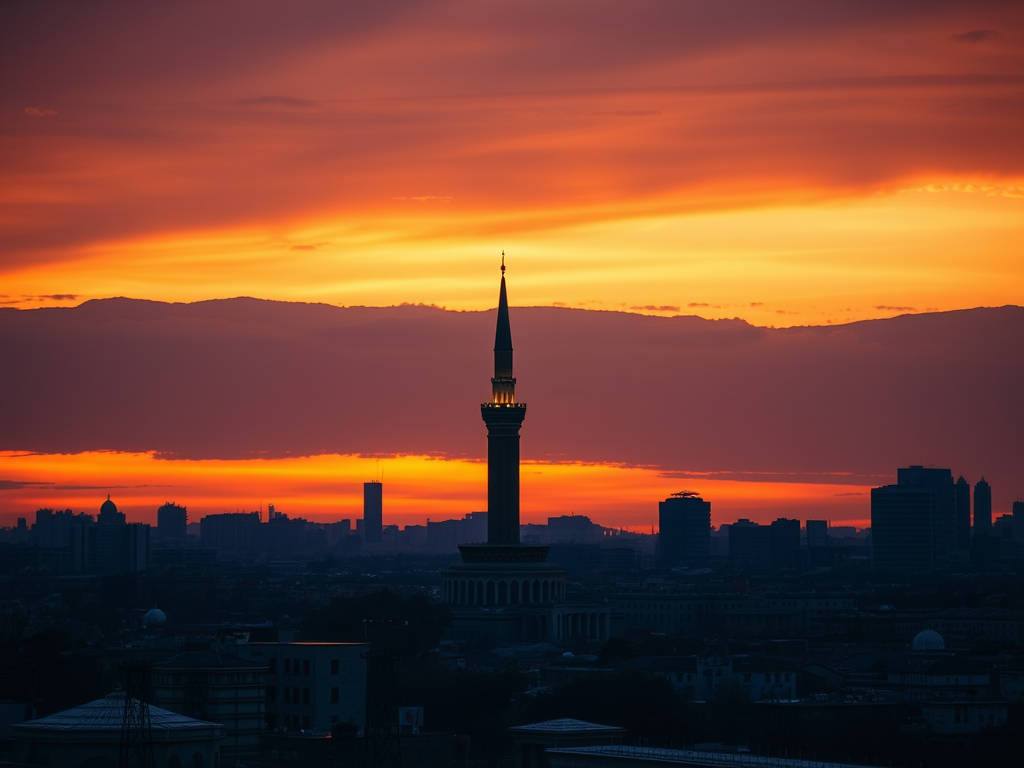
When a Capital Stops Being an Argument
I still remember the way adults spoke about Moscow when I was younger.
Not warmly. Not lovingly. But with certainty.
As if one city, one flag, one system had already settled the debate. Similarly, discussions about the potential Iran theocracy collapse echo with that same conviction.
Then it didn’t.
Something similar hangs in the air today when people talk about Iran. The tone is different, the vocabulary religious instead of ideological, but the confidence feels familiar. Too familiar. Iran is no longer treated merely as a country. Talk of Iran theocracy collapse reflects a larger anticipation of change. It is treated as proof.
And that’s where the danger lies.
Tehran Is Not Just a Capital. It’s a Claim.
For nearly five decades, Iran has presented itself as the living example of Islamic theocracy in action. A state not just run by clerics, but justified through them. A system that claims divine legitimacy, not electoral permission.
This matters because movements do not travel on tanks alone. They travel on stories.
As long as Tehran stands, it allows religious political movements across the Muslim world to say, look, it works. Look, God’s law can run a modern state. Look, resistance to liberal democracy has a successful alternative.
In Pakistan, that argument echoes loudly. Not always shouted. Sometimes whispered in seminaries, sometimes coded into slogans about morality and order. Iran’s survival gives those arguments backbone. Amid such discussions, the idea of an Iran theocracy collapse emerges as a potential turning point.
Without Tehran, they become theory again. Theory is easier to question.
The Soviet Lesson We Pretend Not to Remember
When the Soviet Union collapsed, communism did not vanish overnight. Parties remained. Flags stayed folded in cupboards. Old men kept the faith.
But something essential was lost.
Moscow had not only been a capital. It had been evidence. Evidence that history had a direction, that capitalism was doomed, that the future was already written.
Once that evidence collapsed, the narrative cracked. Not everywhere at once. Not instantly. But irreversibly.
No amount of nostalgia could fully repair that loss of credibility.
Tehran today occupies a similar symbolic position for political Islam. It is not just governing Iranians. It is underwriting an idea that resists the possibility of an Iran theocracy collapse.
What Happens If the Example Fails?
If Iranians themselves dismantle this system, it will not merely be a domestic upheaval. It will be a philosophical defeat.
Not because religion disappears. It won’t.
Not because faith weakens. It won’t.
But because the claim that clerical rule is inevitable, divinely protected, or historically destined would suffer a mortal blow.
Movements built on moral certainty struggle once certainty evaporates. They can survive repression. They can survive sanctions. They struggle to survive embarrassment. The notion of an Iran theocracy collapse adds a layer of uncertainty to this struggle.
That is the real fear. Not chaos in Tehran, but doubt in Lahore, Jakarta, Cairo, and beyond.
Ideas Die When Their Showcases Collapse
History is unkind to systems that insist they are beyond questioning. When their living examples fail, debates reopen. Heresies return. Silence breaks.
This is not an argument for or against Iran’s government. It is an observation about power and belief.
States rise. States fall.
But when a state is also an argument, its fall reshapes minds far beyond its borders.
Maybe that’s why so many people are nervous.
Not about protests.
About precedent and the implications of an Iran theocracy collapse.
Leave a Reply