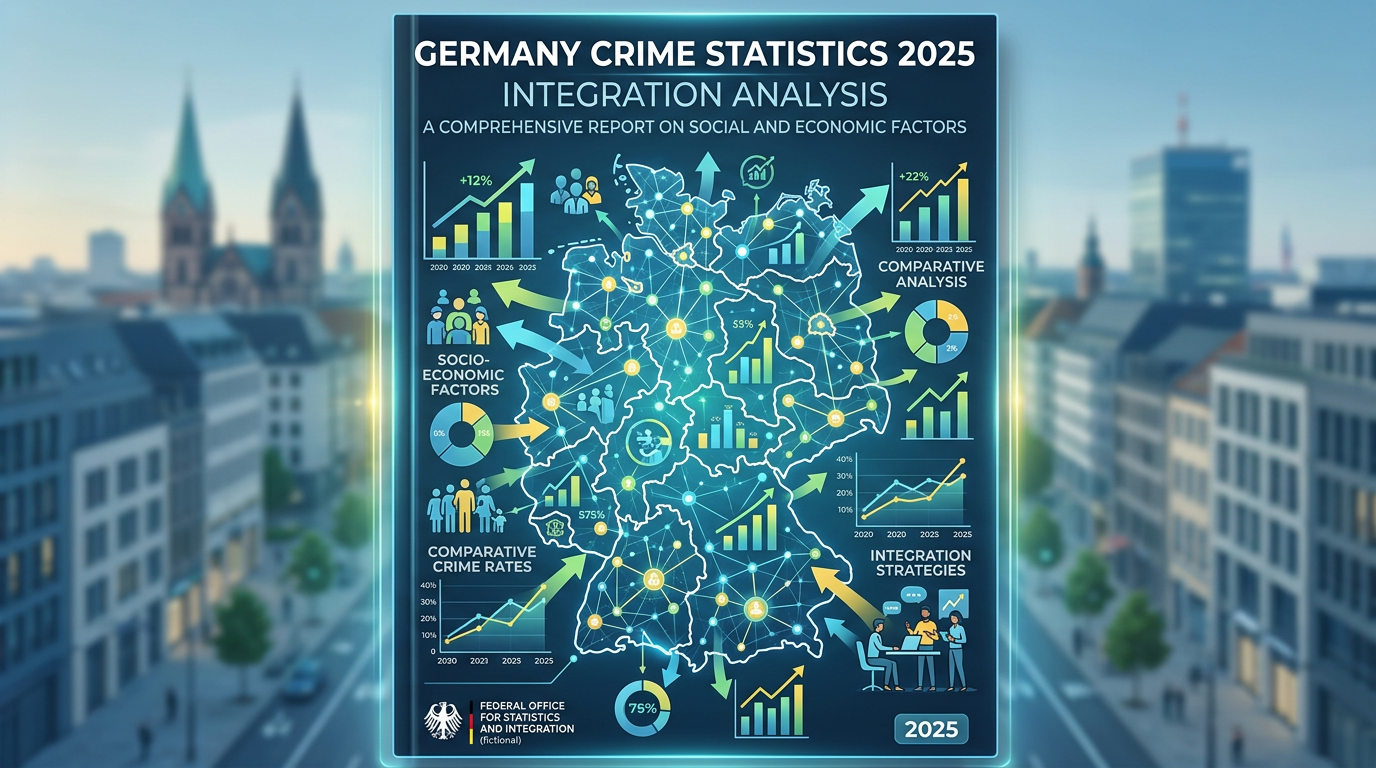
I find that discussing national security often requires walking a fine line between hard data and human reality. The recently released 2025 Police Crime Statistics (PKS) from the Federal Criminal Police Office (BKA) have sparked a intense debate across Germany. While the report indicates a significant presence of non-German suspects in violent crime categories, a deeper look reveals that socio-economic hurdles and legal barriers play a much larger role than nationality alone.
Understanding the BKA Methodology and Context
To maintain credibility, I believe we must first look at how the BKA compiles this data. The PKS records “suspected” individuals at the end of a police investigation, which is not the same as a court conviction. Furthermore, the migrant population is statistically younger and more likely to be male compared to the aging general German population. These demographic factors naturally correlate with higher crime statistics regardless of origin.
- Suspect vs. Convicted: Data reflects police investigations, not final judicial rulings.
- The “Duldung” Trap: Many individuals from Syria or Afghanistan hold a “tolerated” status, which often prevents them from legal employment, increasing the risk of “crimes of necessity.”
Integration Successes Amidst the Data
Despite the headlines, I feel it is vital to acknowledge the immense positive contributions of immigrant communities. In 2025, Germany saw a record 70% employment rate among its migrant population, filling critical gaps in the medical, engineering, and IT sectors. The government also committed over €1 billion toward integration and language courses to ensure new arrivals can participate fully in society.
| Integration Metric (2025) | Status | Impact |
|---|---|---|
| Migrant Employment | 70% (Record High) | Strengthening the German pension and tax system. |
| Integration Funding | €1.1 Billion | Reduced social isolation for new arrivals. |
| Skilled Labor Visas | Up by 15% | Accelerated entry for specialized Pakistani and Indian professionals. |
The 2026 Policy Shift and Community Impact
The German government is currently pivoting toward a “Security Through Order” model. Following the EU’s 2026 Migration Pact, we are seeing faster processing of asylum claims and stricter removals for those who violate the Residence Act. While these measures aim to restore public trust, I’ve observed they also create anxiety among law-abiding residents who fear increased profiling.
I believe the path forward requires a focus on early labor market access. When people are allowed to work immediately upon arrival, the incentive to engage in the shadow economy disappears. Security is not just about policing; it is about providing a stake in the community.
As Germany implements these new 2026 security protocols, the question remains: Can the nation remain a beacon for global talent while enforcing its strictest domestic security measures in decades?
Meta Description: Analysis of Germany’s 2025 crime statistics and the 2026 policy shift. Explore the link between socio-economics, integration success, and BKA data.
Leave a Reply