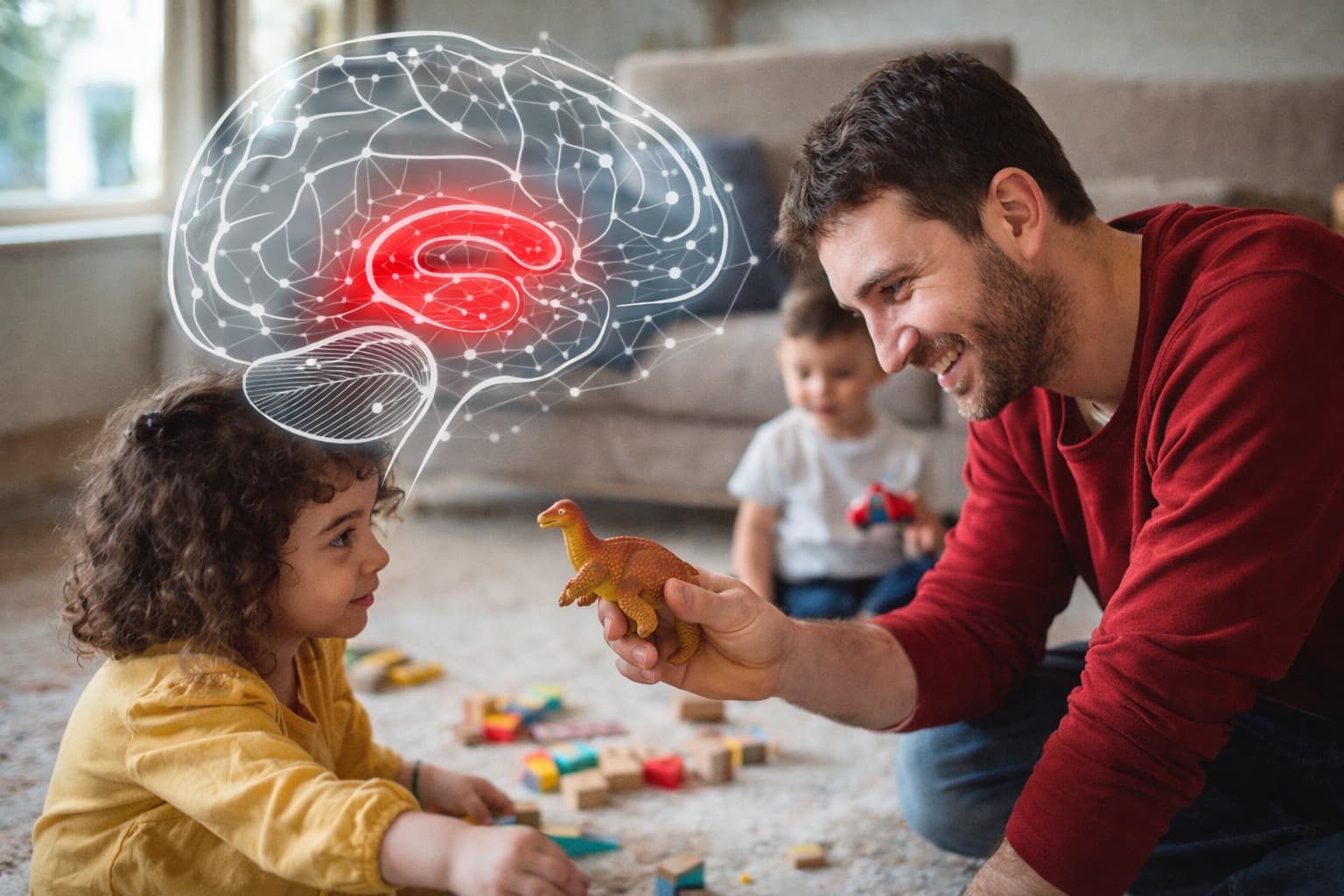
Hippocampus-based learning for children sounds technical. Almost academic. I didn’t think much about it until I started watching Raahima closely.
Not in a classroom. Just at home. Toys everywhere. One minute she’s focused, the next she’s chasing something completely unrelated.
At first, it felt like distraction.
Now I’m not so sure.
The hippocampus helps the brain form memories and connect ideas. That’s the simple version. It doesn’t store information like a file cabinet. It builds something closer to a map.
That distinction matters more than I realized.
Because most of what we offer children today… isn’t built for maps. It’s built for delivery.
Screens. Videos. Even “educational” content. It flows in one direction.
I read somewhere that active learning can double retention compared to passive exposure. The exact number might vary. Still, the idea sticks. Engagement changes everything.
And yet, convenience keeps pulling us the other way.
Hippocampus-Based Learning for Children in Real Life
Raahima loves her Dino videos. Bright, noisy, fast-moving. You can see the excitement on her face.
We let her watch. Sometimes a little more than we should. I’ll admit that.
But I started noticing something odd.
She enjoys it… then forgets it.
No carryover. No connection.
One evening, almost by accident, we tried something different.
I picked up a small toy dinosaur and moved it slowly across the floor. Made a rough sound, nothing accurate. Hid it behind a cushion. Asked her, “Where did it go?”
She paused. Looked around. Then crawled toward the cushion and found it.
That moment felt different. Slower. Fuller.
Maybe I’m reading too much into it. Or maybe not.
What Changed?
Screens pull her in. Quietly. No resistance.
Play pushes her out into the room.
When she watches:
There’s no space to explore
No decision to make
No physical link to what she sees
When she plays:
She moves
She searches
She connects action with outcome
That’s not just entertainment. That’s the brain building structure.
I keep thinking about Salar as well. He’ll grow into a world even more saturated with content. Faster screens. Smarter algorithms. Less patience required.
His brain, though, will still need the same thing.
Connections.
What I’m Trying at Home (Still Learning Myself)
1. Let movement do the teaching
Instead of naming objects, I try to involve motion. Roll the ball. Hide it. Bring it back.
It takes more effort. Feels slower. But something sticks.
2. Use the room as part of the lesson
“The book is near the chair.”
“The toy is under the table.”
Simple phrases. Still, they seem to anchor better.
3. Repeat, but not the same way
This one took me time to understand.
Repetition alone doesn’t work. Variation does.
Watch something. Then act it out. Then maybe draw it. Or just talk about it in broken words.
4. Cut back screens… a bit
I won’t pretend we eliminated them. That would be dishonest.
But we’re trying to reduce the easy default. The “just play a video” habit.
Some days we succeed. Some days we don’t
5. Step back (this is the hardest)
She was stacking blocks the other day. They kept falling.
I almost helped. Actually, I did lean forward… then stopped.
She adjusted her grip. Slowed down. Tried again.
It worked.
That small pause. That effort. That quiet correction. It stayed with me.
A Thought I Keep Coming Back To
We think we are teaching children.
Maybe we are. But more often, we are shaping the conditions in which their brain teaches itself.
That’s a different responsibility.
Raahima is figuring things out in her own messy way. Salar will too. Their paths won’t look the same. That’s fine.
The real question sits somewhere else.
Are we making learning too easy?
Too smooth.
Too passive.
Because the brain doesn’t seem to learn that way.
It learns through connection. Through movement. Through small struggles that don’t look impressive from the outside.
And maybe… that’s where real understanding begins.
Leave a Reply