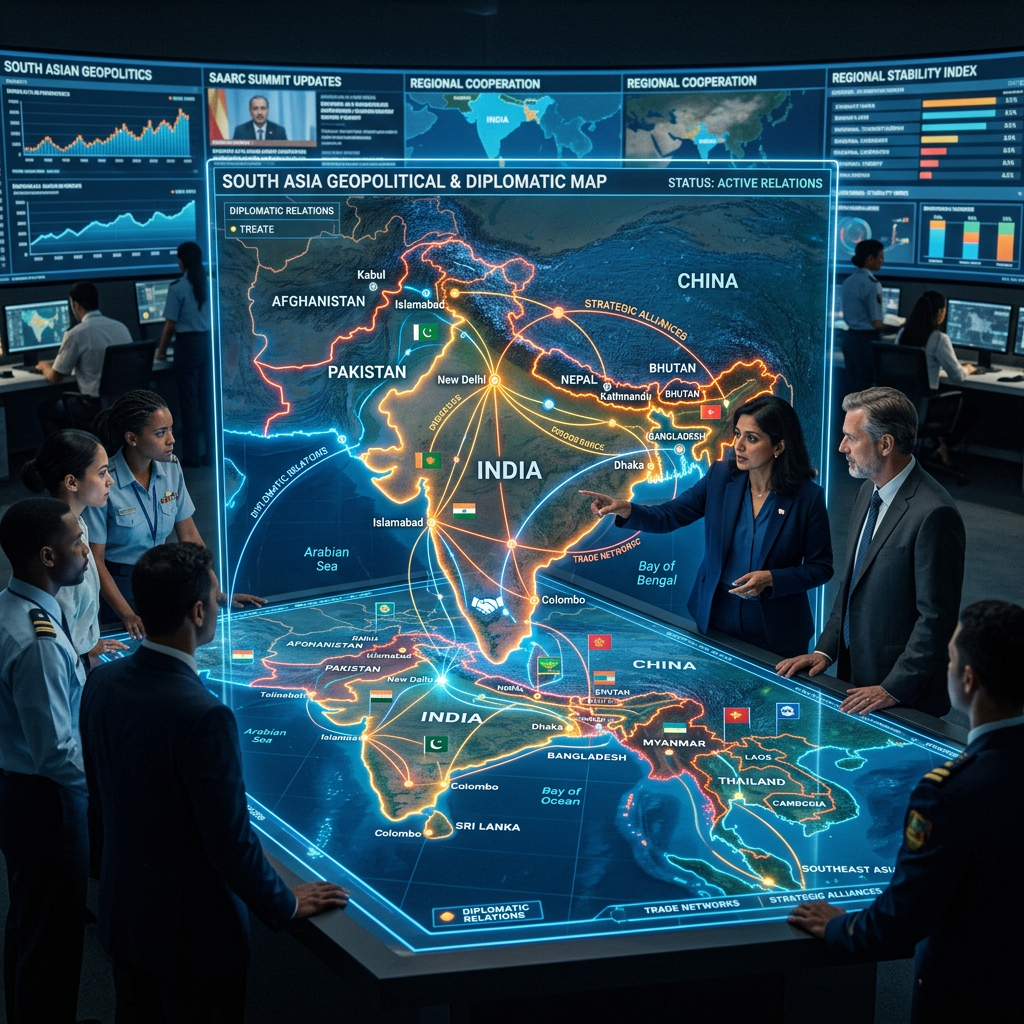
A Role Few Expected
Pakistan Middle East diplomacy has moved from the margins to the center of a fast-moving crisis.
For decades, Islamabad appeared in global headlines for the wrong reasons. Security concerns. Internal instability. A complicated reputation. That framing is now under strain. Recent mediation efforts tied to Middle East tensions have placed Pakistan in a different role. Not a disruptor. A facilitator.
That shift needs context. It did not emerge overnight.
How Pakistan Found Space in a Crowded Region
Pakistan’s position comes from something simple but rare. It maintains working ties with multiple sides at once.
- Functional relations with Iran
- Long-standing links with Gulf Cooperation Council states
- Security engagement with the United States
This combination is not common. In crisis situations, access matters more than ideology.
According to analysis discussed on Bloomberg, countries that could speak to all parties suddenly became critical. That created an opening. Pakistan stepped into it.
A small but telling data point: over 60% of Pakistan’s external trade is linked directly or indirectly to Gulf and Middle East routes, according to regional trade estimates. Stability there is not optional. It is existential.
India’s Position: Strength Without Leverage
India did not fail here. It stayed out.
That distinction matters, but it does not remove the consequences.
India’s foreign policy approach is cautious. It avoids mediation unless invited. It protects long-term partnerships, especially with Israel and the United States. This provides stability. It also limits flexibility.
Three structural constraints stand out:
- Israel relationship: Strong and visible. Limits neutrality in Iran-related tensions.
- Iran ties: Functional but not deep enough for mediation leverage.
- U.S. alignment: Valuable, yet recently uneven.
As Michael Kugelman noted in discussion, India lacks simultaneous trust across all key actors in this crisis. That is not a weakness in normal times. In a mediation moment, it becomes one.
The Global South Question
India’s ambition to lead the Global South now faces a quiet contradiction.
Across Asia, Africa, and Latin America, public sentiment has leaned strongly against recent Middle East escalations. Many governments have taken cautious or critical positions on Israel’s actions in Gaza and Iran.
India, however, maintains close ties with Israel.
That creates a perception gap.
You cannot fully represent a bloc if key members question your neutrality. The challenge is not immediate. It is gradual. But it accumulates.
The U.S. Factor: A Subtle Recalibration
The United States is not switching sides. It is adjusting position.
Washington has a long history of dual engagement in South Asia. It invests in India for long-term strategic balance against China. It engages Pakistan when operational access is required.
Recent developments suggest a tactical shift:
- Renewed engagement with Pakistan’s military leadership
- Reported encouragement for Pakistan to facilitate dialogue
- A slower pace in U.S.–India trade negotiations
This matters because perception shapes policy. If New Delhi sees Washington leaning toward Islamabad, even temporarily, it recalibrates its own strategy.
For India, this is less about loss and more about uncertainty.
A New Phase in India–Pakistan Rivalry
The rivalry is evolving.
Not disappearing. Not softening. Changing form.
From:
- Military confrontation
- Border crises
- Historical narratives
To:
- Diplomatic access
- Influence over negotiations
- Control of international perception
Pakistan, for now, is gaining ground in this new arena.
One comparison stands out. In the past, visibility for Pakistan often came from crises linked to security concerns. Today, visibility is tied to conflict resolution efforts.
That difference reshapes how global actors engage.
How India Might Respond
India is unlikely to remain passive if this trend continues.
Several adaptation paths are already visible or possible:
1. Strategic patience
Continue observing. Let Pakistan take the risk of mediation. Step in later if stability returns.
2. Quiet diplomacy expansion
Strengthen backchannel communication with Iran and Gulf states without public visibility.
3. Economic leverage approach
Use initiatives like the India–Middle East–Europe corridor (IMEC) to anchor long-term influence instead of short-term diplomacy.
4. Narrative recalibration
Reframe its Global South leadership through economic development and climate cooperation rather than conflict mediation.
Each option carries trade-offs. None offers immediate correction.
The Risk for Pakistan
Pakistan’s rise in this moment is conditional.
If mediation leads to sustained de-escalation, its credibility increases sharply. It begins to look like a reliable middle power.
If talks fail, exposure increases.
Diplomatic visibility works both ways. It rewards success. It amplifies failure.
That is the narrow path Islamabad is walking.
Conclusion: A Temporary Shift or a Lasting Pattern?
Pakistan Middle East diplomacy has introduced a new variable into South Asian power politics.
India still holds structural advantages. Economic scale. Global partnerships. Long-term strategic alignment. These do not disappear.
But influence is not always structural. Sometimes, it is situational.
Right now, Pakistan has situational advantage.
Whether that turns into lasting power depends on one thing. Not narratives. Not headlines.
Results.
Leave a Reply