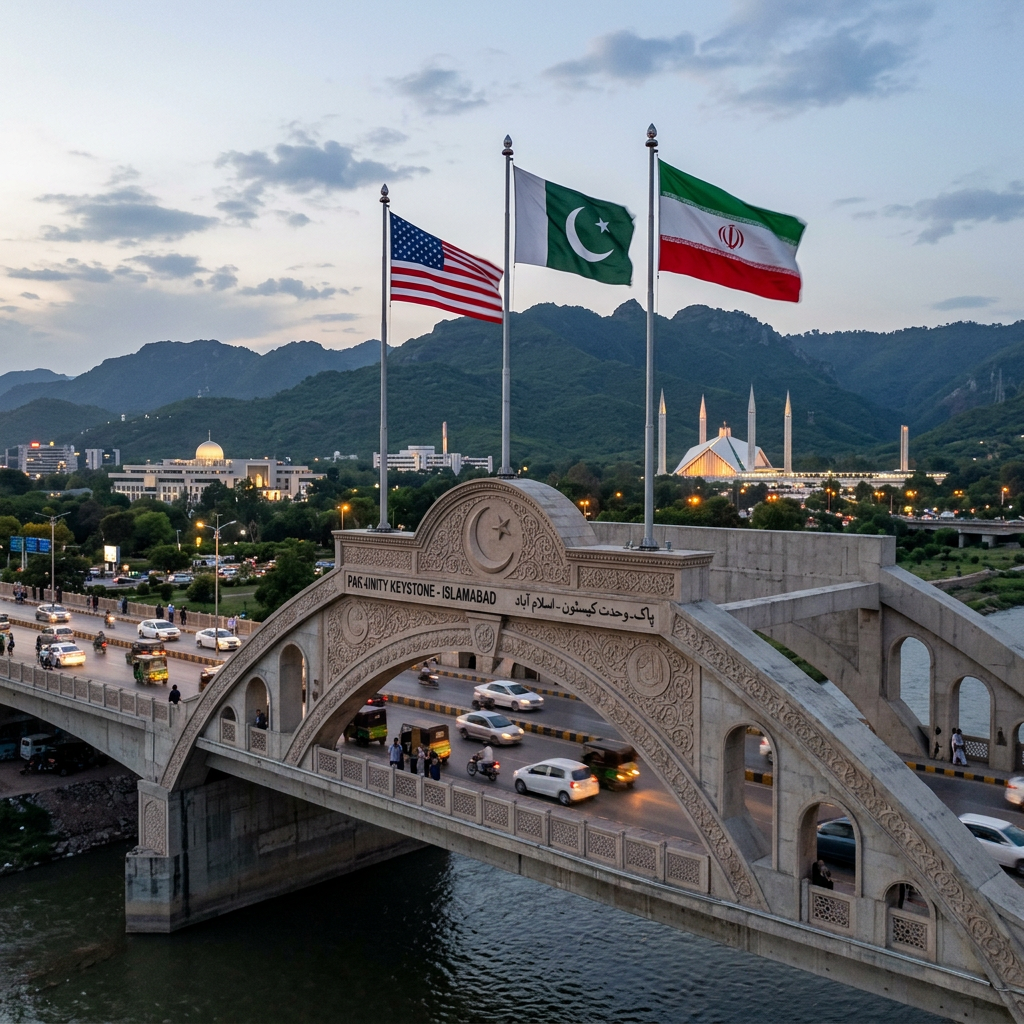
The Islamabad Breakthrough: A Massive Shift in Power
The 2026 peace talks in Islamabad didn’t just end a fight; they flipped the script on global politics. While the world held its breath during a “fragile ceasefire” after seven weeks of brutal conflict, Pakistan stepped into the spotlight as the unexpected leader and key Pakistan mediator in US-Iran peace talks.
For decades, we looked to middle powers like Oman or Turkey to fix Middle Eastern tensions. But as the 2026 crisis spiraled, those old channels just didn’t work. Pakistan was the only one left with the right keys—a unique set of relationships that could actually get Washington and Tehran into the same room.
A Legacy of Mediation: Why We Were Ready
Our role in 2026 wasn’t a lucky guess. It was built on decades of walking a very thin tightrope:
- The U.S. Partnership: We’ve worked together through the Cold War and the long years of the War on Terror.
- The Iranian Connection: This goes back to 1947. Iran was the first country to recognize us as a nation, and that bond runs deep.
- We’ve Done This Before: Don’t forget, we helped open the door between the U.S. and China back in 1971.
The Inside Track: Why It Worked
Our success wasn’t accidental; it was the result of a “diversified portfolio of relationships”.
1. Real Trust with Washington
A huge factor was the direct “bonding” between the Trump administration and our military leadership. Because we cooperated early on counter-terrorism, the U.S. trusted us when things got ugly.
Boots on the Ground: I remember the humid air at the Nur Khan Airbase the day the U.S. delegation landed. The security was stifling, and the tension was thick. You could see it on their faces—they knew military force wasn’t the answer anymore. They needed a way out, and they needed us to find it.
2. Deep Ties with Tehran
We share a 900-kilometer border with Iran. More importantly, we share a culture. As home to the world’s second-largest Shia population, we could talk to Iranian leaders in a way Western powers simply couldn’t.
3. Staying Balanced
Even after signing a defense deal with Saudi Arabia in 2025, we stuck to a “limited alignment” policy. We stayed neutral. That made Islamabad the only safe ground where rivals could talk without looking over their shoulders.
Visualizing the “Strategic Bridge”
It’s easy to see why we were the only choice:
- Geography Matters: That 900km border makes us Iran’s most important neighbor.
- The Crossroads: We sit right between Iran, the Gulf states, and China.
- The Proof: Our location is the reason we became the indispensable “bridge”.
The End of “Might is Right”
The 2026 war proved one thing: brute force has its limits. Even with the world’s best military, the U.S. couldn’t win this with strikes; they needed “frantic diplomatic work”.
Veteran diplomat Maleeha Lodhi put it best: the American security umbrella “was of no value” when things got real because it didn’t actually protect the people. By coming to Islamabad, the U.S. admitted that a superpower can’t always go it alone.
A Win for the People
Think about the student whose university was shut down for weeks, or the driver who spent his nights in a gas station line. This ceasefire isn’t just about maps and treaties; it’s about them. It’s a lifeline. When the region stabilizes, our economy starts to breathe again.
Conclusion: Pakistan’s New Standing
We aren’t just a player in someone else’s war anymore. We are the ones keeping the peace. As the talks continue, it’s clear that if the U.S. and Iran want to keep talking, they’ll be doing it through us. The road to peace now runs through Pakistan.
Leave a Reply