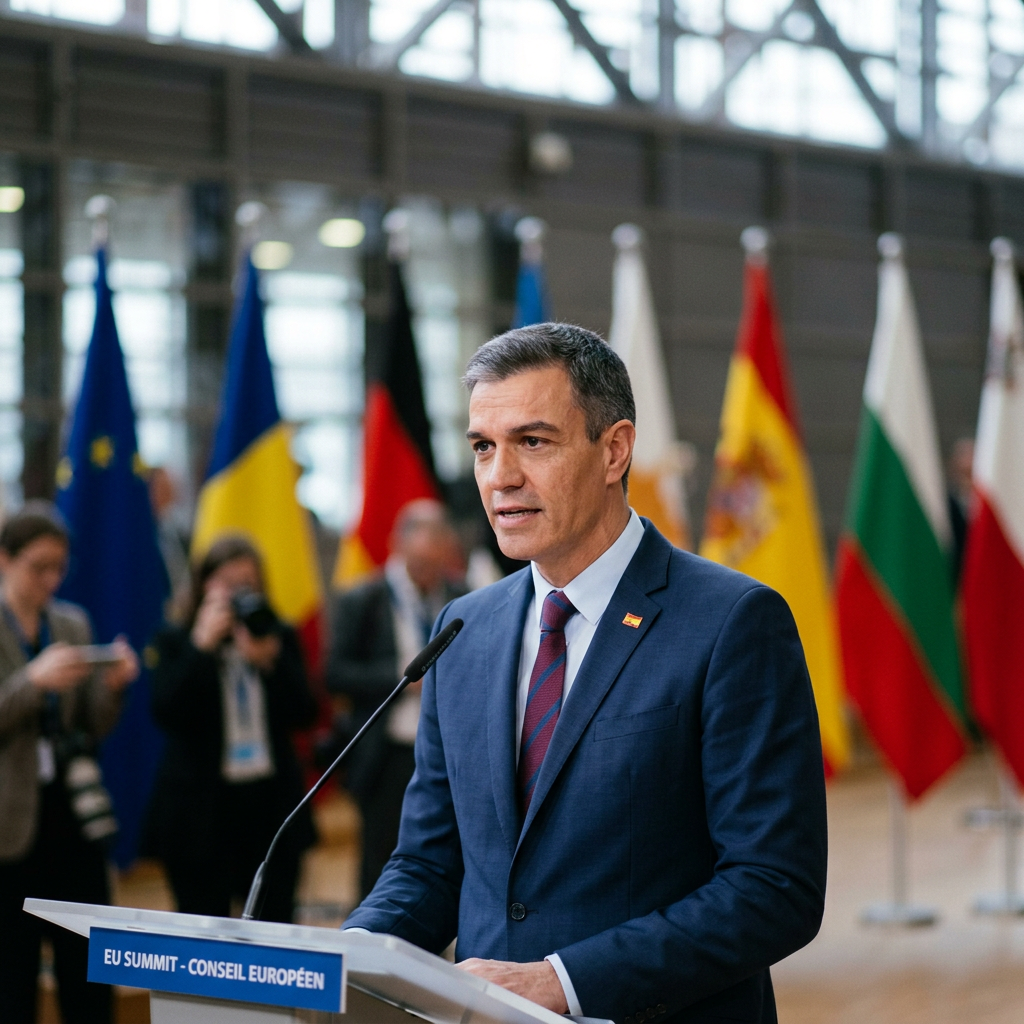
I kept coming back to one phrase while tracking the Spain foreign policy shift over the past few weeks. Not a headline. Not a speech. A pattern. Madrid is speaking louder on Israel, opening doors to Beijing, and irritating Washington at the same time.
That combination is not accidental. At least, it doesn’t feel like it.
Something is moving under the surface.
What the Spain Foreign Policy Shift Really Signals
The facts are already in the open. Reuters and BBC News have both reported Spain’s push inside the EU to take a firmer line on Israel. At the same time, Prime Minister Pedro Sánchez has expanded diplomatic engagement with China and signaled openness to broader partnerships beyond the usual Western circle.
There is also movement on EU-Israel agreements. That matters more than it sounds. These frameworks shape trade access, legal obligations, and political alignment across the bloc. Once you touch them, you are not just making a statement. You are adjusting the system itself.
Most people are reading this as a moral stance. Or a political gamble.
I don’t think that’s the full picture.
From where I sit, alignment shows up in quieter places first. In banking channels. In settlement behavior. In how transactions move through the SWIFT network. Who clears where. Which compliance filters tighten. Which jurisdictions suddenly feel slower, or more scrutinized.
These shifts rarely make headlines. They start as small frictions.
Then they accumulate.
Spain is behaving like a mid-tier power that knows its limits.
Or at least, that’s how it looks from the outside.
But the sequencing tells a different story. Push inside the EU. Engage China. Signal independence on Israel. None of this breaks the system. It stretches it. A calibrated move. Pressure without rupture.
I paused on that thought. It sounds too neat. Maybe I am reading too much coordination into what is still partly reactive diplomacy. Still, the pattern is hard to ignore.
There is a deeper tension here. The EU often presents itself as a rules-based actor. Spain is now asking, more directly than most, whether those rules apply evenly. Or selectively.
That question travels.
It lands in European capitals, yes. But it also lands in places that already doubt Western consistency. And once that doubt settles in, it does not leave easily.
Historically, Spain has never been entirely comfortable as a quiet Atlantic partner. The memory of the Spanish-American War still sits somewhere in the background, even if rarely discussed. Today’s friction is not about history repeating itself.
It feels more like adjustment. A country recalibrating its position in a system that no longer feels as stable as it once did.
So what is this, really?
Not a break. Not yet. More like a stress test. Madrid is probing the edges of Western unity, measuring how far it can move before the system pushes back.
And here is the part I can’t quite settle.
If this strategy holds, and if it stays within the system without triggering a response, who else is already thinking the same thing?
Leave a Reply