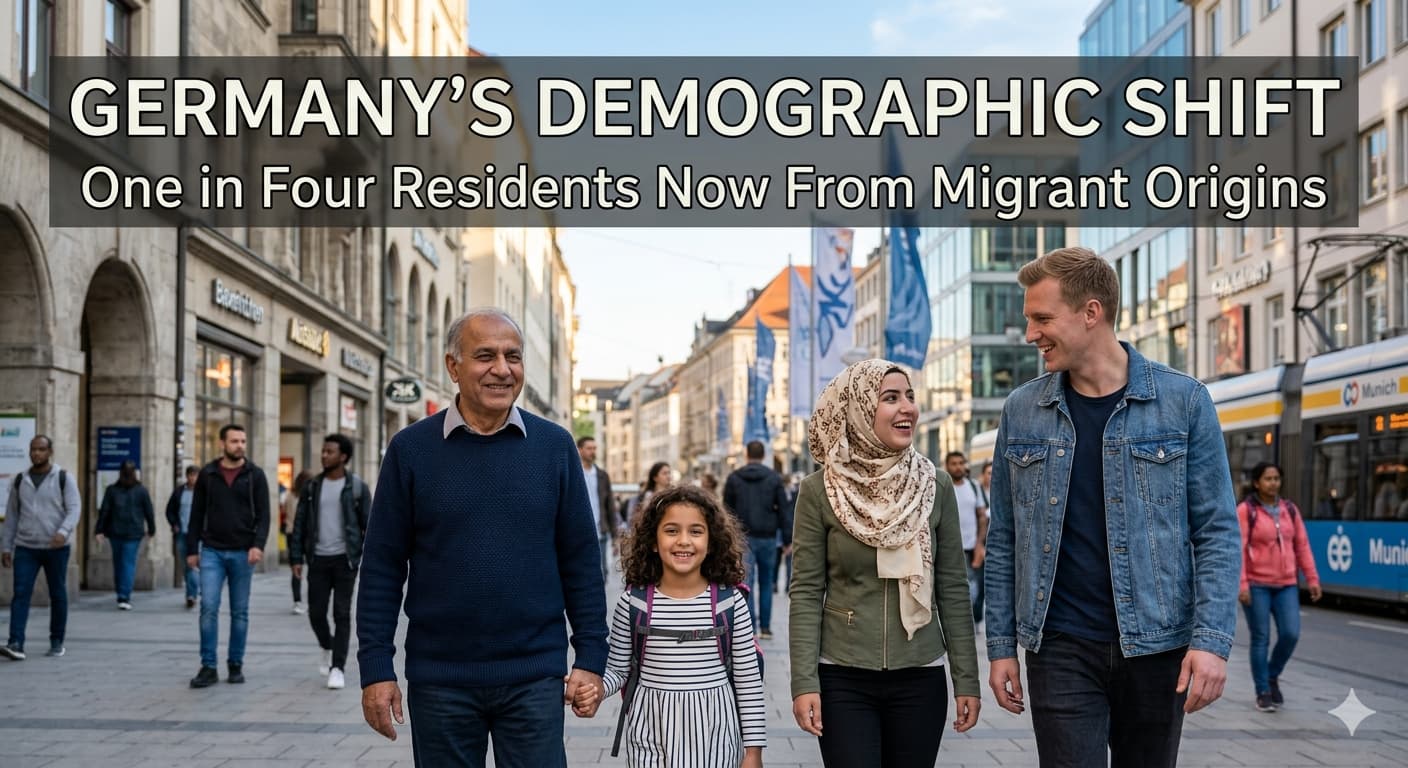
I often walk through the streets of Munich and notice a vibrant, multicultural pulse that defines modern Germany. Recent data from the Federal Statistical Office (Destatis) confirms that this is not just an observation. One in four residents, or approximately 26.3% of the population, now has a history of immigration. While spending time with my grandson, Salar, I see this reality in the younger generation, where the ratio of migrant backgrounds reaches a staggering 36%.
The New Face of German Society
Germany has transformed into a multicultural hub with 21.8 million people carrying an immigration history. This demographic is, on average, nine years younger than the local population. This youthfulness provides a vital spark to Germany’s aging workforce. Educationally, these individuals are highly competitive, with 33% holding university degrees, matching the national average.
| Category | Details / Statistics |
|---|---|
| Total Migrant Background | 21.8 Million (26.3%) |
| Direct Immigrants | 16.4 Million |
| Born in Germany (Migrant Parents) | 5.4 Million |
| Share in Youth (Ages 25–34) | 36% |
Rise of Pakistani and Afghan Communities
I have witnessed the Pakistani community in Germany grow to exceed 150,000 people. Many reside in the state of Hesse, particularly in Frankfurt. The introduction of the Opportunity Card (Chancenkarte) in 2024 has paved the way for skilled professionals. Now, young Pakistanis are moving beyond traditional labor roles into IT, engineering, and medical sectors.
The Afghan community has also become a significant pillar of society, numbering over 461,000. While many arrived seeking protection, nearly 42% are now integrated into the formal labor market or vocational training. Hamburg remains a primary hub for this group, where they constitute nearly 2.7% of the city’s total population.
An Evolving National Identity
Historically, Germany relied on “guest workers” in the 1960s to rebuild its economy. Today’s shift feels more permanent and deeply woven into the social fabric. The government is investing heavily in language programs and integration to harness this diversity as a national strength. Whether this transformation will seamlessly blend with traditional German identity or create a entirely new cultural landscape remains an open question.
Leave a Reply