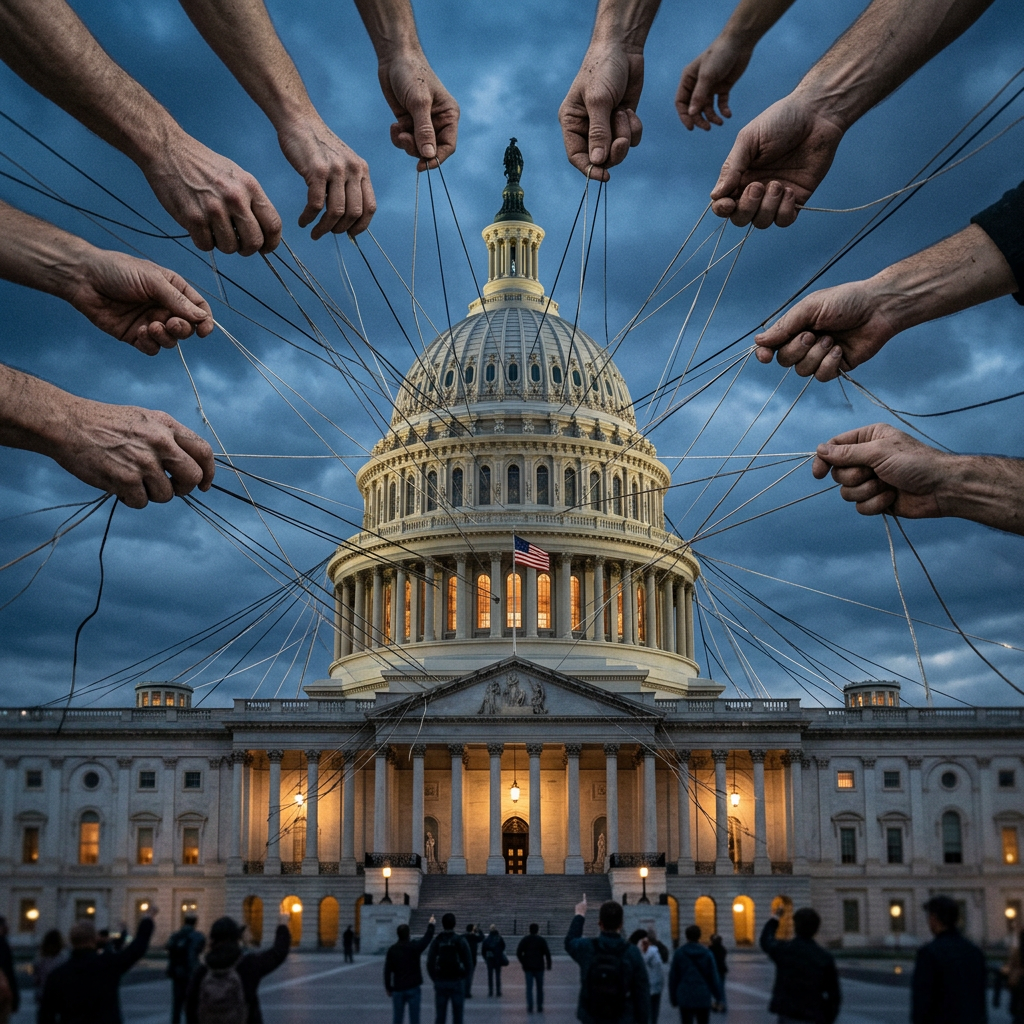
AIPAC lobbying influence has become a kind of shorthand. Scroll through comment sections or listen to political debates, and you’ll hear it used as a catch-all explanation for what feels broken in Washington. One group. One lever. One answer.It sounds neat. Almost too neat.Because the reality is messier, and, if we’re honest, more unsettling.
AIPAC lobbying influence vs the wider lobbying ecosystem
Start with the basics. AIPAC is a powerful lobbying organization. It supports candidates, builds relationships, and promotes policies aligned with Israel.
None of that is hidden.
But step back for a moment.
- The U.S. pharmaceutical industry spends over $350 million annually on lobbying
- Defense contractors regularly exceed $100–150 million per year
- Big Tech companies have sharply increased lobbying spend over the past decade
Now the question shifts.
Not who controls Washington?
But how many actors are competing to shape it?
That shift matters more than it first appears.
The myth of a single power center
It’s tempting to believe in one dominant force. It simplifies everything. It gives frustration a clear target.
But power in Washington does not work like a switch. It behaves more like traffic at Shahrah-e-Faisal at 6 p.m. Everyone pushing forward. No one fully in control.
Legislation stalls. Deals fall apart. Courts intervene. Elections reshape outcomes.
If one group truly controlled the system, you would not see:
- policy reversals every election cycle
- internal party divisions
- contradictory foreign policy signals
You would see consistency. We don’t.
What AIPAC lobbying influence actually does
Here’s the more grounded view.
AIPAC operates within a broader structure where:
- money buys access, not absolute control
- influence shapes priorities, not guaranteed outcomes
- alliances matter more than any single donor network
Yes, AIPAC-backed candidates often support pro-Israel policies. That is expected.
But so do:
- defense-aligned lawmakers
- ideological conservatives
- strategic realists in foreign policy circles
Different motivations lead to the same votes.
That complexity rarely makes it into viral posts. Maybe because complexity doesn’t travel well online.
Why the narrative keeps simplifying itself
There’s a certain comfort in reducing systems to villains. It makes politics feel readable.
But it comes at a cost. And we’re starting to feel it.
When everything is framed around AIPAC lobbying influence as the single cause:
- structural problems get ignored
- broader lobbying networks escape scrutiny
- public debate becomes narrower, not sharper
And, oddly enough, accountability becomes weaker.
Because if the problem is everywhere, it demands systems thinking. Not shortcuts.
The real issue behind AIPAC lobbying influence debates
The deeper issue isn’t just AIPAC lobbying influence. It’s the structure that allows all lobbying to shape policy at scale.
Campaign financing rules.
Revolving doors between government and industry.
Policy dependence on donor networks.
It’s a system that almost runs on its own now.
Remove one actor, and the system doesn’t reset. It adjusts.
Quietly.
Conclusion: power doesn’t sit in one room
Blaming a single organization might feel decisive. It isn’t.
Power in modern democracies is distributed, negotiated, and often obscured. That makes it harder to explain, and harder to fix.
Still, it also makes it harder to reduce everything to a single story.
The real question isn’t who controls the system.
It’s why the system is designed to be influenced so easily.
And that question tends to stay with you a little longer.
Leave a Reply