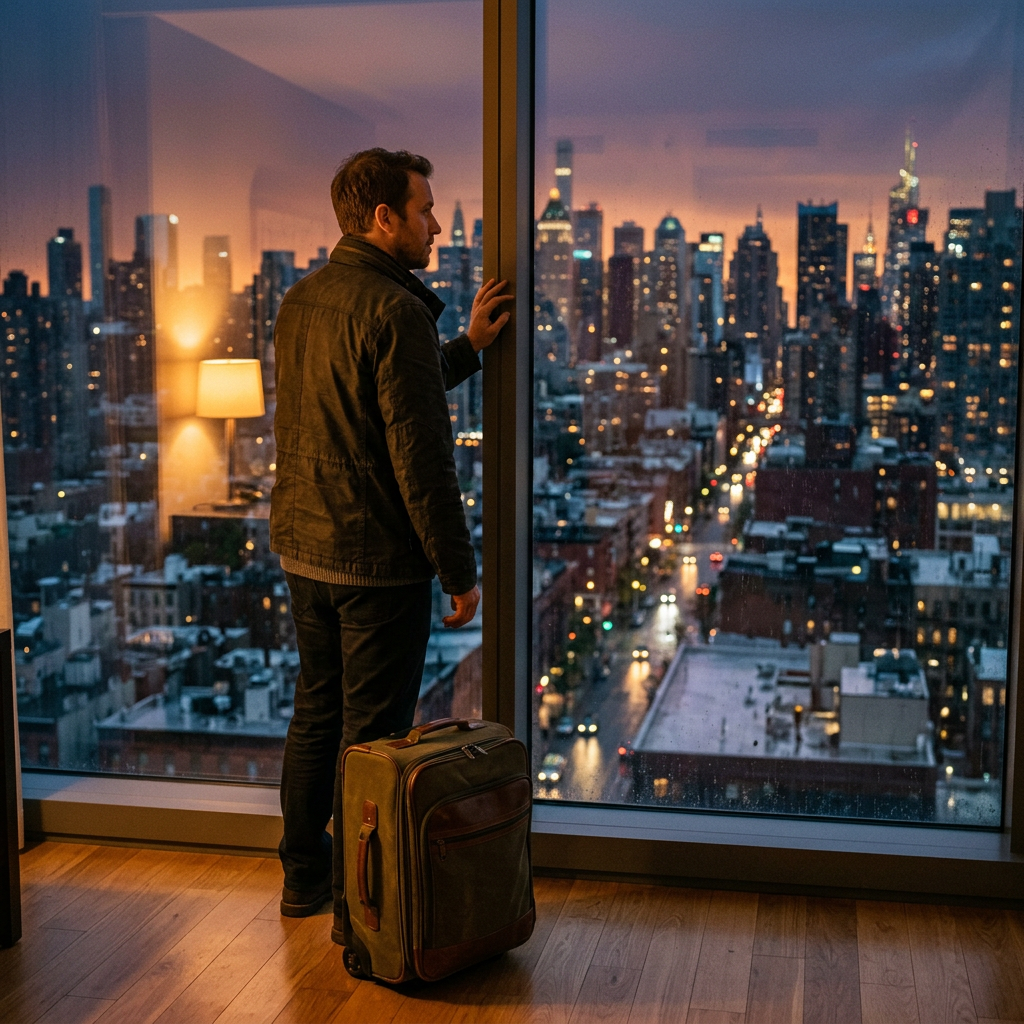
From where I sit in Karachi, watching the Indian-American community’s slow unravelling of faith in the United States feels like watching a familiar play from the wrong side of the stage. South Asians have always understood, somewhere in the back of their minds, that belonging in the West is conditional. The lease can be renewed. Or it can quietly not be.
What is new, and genuinely striking, is that Indian-Americans are now saying so out loud.
A major survey published this month by the Carnegie Endowment for International Peace, conducted with YouGov across 1,000 Indian-American adults between November 2025 and January 2026, found that nearly 40% have considered leaving the United States. The researchers describe the community as being in “turbulence,” a word that is careful but probably too mild for what the data is actually showing.
What the Survey Found
The 40% breaks down into two groups: 14% who say they frequently think about leaving, and 26% who think about it occasionally. Carnegie’s own report cautions against treating this as a prediction of mass departure. Contemplating something and doing it are different things. Most of these people have mortgages, children in school, and careers deeply embedded in American institutions.
But the caution can be overdone. The size of the number matters precisely because this is a community that, for thirty years, functioned as one of the most committed believers in American meritocracy. These are not recent arrivals still weighing their options. Many are second-generation professionals who grew up American, voted American, and built their entire adult lives on the assumption that they were here permanently, even when the law said otherwise.
[Source: Carnegie Endowment / YouGov Survey via The Federal: https://thefederal.com/category/news/end-of-the-american-dream-why-40-pc-of-indian-americans-consider-leaving-the-us-240291]
The reasons they give for reconsidering are worth taking seriously one by one, because they overlap in ways that make the picture more serious than any single factor alone suggests.
Politics: When the Host Country Stops Feeling Like Home
Frustration with the US political climate tops the list, cited by 58% of those considering leaving. A further 71% expressed disapproval of how the current administration has handled both the economy and immigration. That is not a marginal dissatisfaction. It is a community telling you, in large numbers, that the government does not have its interests in mind.
For much of the past three decades, Indian-Americans largely stayed out of America’s culture wars. They focused on career, family, community. The classic immigrant compact: keep your head down and prove your worth through achievement. That compact is visibly fraying. The political climate, with its rhetoric of “America for Americans,” has made many South Asians feel less like contributors and more like guests being perpetually assessed for continued admission.
The online environment has sharpened this. The survey found nearly half of respondents (48%) had seen racist content targeting Indians or Indian-Americans on social media very or somewhat often since early 2025. Half said it left them angry. One in three reported anxiety. Nearly one in four said they had been called a slur since the start of 2025. These are not abstract political concerns. They show up in how people move through their days.
[Source: American Kahani full survey breakdown: https://americankahani.com/community/one-in-three-indian-americans-has-thought-about-leaving-the-united-states/]
What makes this especially significant is that, according to Carnegie, the actual rate of personal discrimination has not statistically worsened since 2020. What has worsened is the ambient environment: the sense that hostility is normalised, even sanctioned from above. People are restructuring their daily lives around it, avoiding certain spaces, self-censoring at work, coaching their children on how to handle encounters with strangers. The Carnegie report calls this “informal self-censorship and social withdrawal.” What it actually describes is a community learning to make itself smaller.
The Green Card Trap Nobody Talks About
This is the part of the story that receives far less attention than it deserves, and which I think is the most structurally damning aspect of the American system’s treatment of Indian professionals.
A vast number of Indians working in the United States are, legally speaking, temporary residents. Not because they want to be, but because the immigration system has engineered a waiting line so long that permanent residency becomes theoretical rather than practical.
Over 1.2 million Indians are currently in the queue for employment-based green cards, according to US government data. The per-country quota allocates the same annual number of green cards to India (a nation of 1.4 billion, and by far the largest source of skilled workers in the system) as it does to Iceland. The result is a backlog that, at current processing rates, stretches to 134 years for applicants in the EB-2 and EB-3 categories. Estimates suggest approximately 424,000 people currently in the queue may not live to see their application resolved.
[Source: Business Standard on 134-year wait: https://www.business-standard.com/immigration/134-year-us-green-card-wait-for-indian-h-1bs-why-backlog-keeps-growing-126031900743_1.html]
[Source: Boundless on 1.2 million Indians in backlog: https://www.boundless.com/blog/1-million-indians-stuck-green-card-backlog]
Think about what this means in a real life. An engineer moves to San Francisco on an H-1B, buys a home, has children who grow up as Americans, pays into the tax system for two decades. And remains, in the eyes of federal law, a temporary worker the entire time. One immigration advocate put it plainly: Indians are not on H-1B visas because they love being on temporary visas. They are on them because the green card system will not release them from it.
The consulate situation adds another layer. As of January this year, all five US consulates in India showed no available H-1B stamping appointments through the end of 2026, with the first open slots appearing in May 2027. A routine trip home has become, for many Indian professionals, a logistical gamble with their own legal status.
[Source: VisaHQ on H-1B stamping backlog: https://www.visahq.com/news/2026-01-27/in/us-h-1b-visa-stamping-backlog-pushes-indian-interview-dates-into-2027/]
The Cost of the American Life Has Quietly Broken the Calculation
54% of survey respondents flagged the rising cost of living, specifically housing, healthcare, and education, as a major reason for reconsidering their future in the US. For middle-class Indian-American families who built their plans around American financial security, the numbers increasingly do not add up.
Housing in the major tech hubs where Indian professionals are concentrated, San Francisco, New York, Seattle, Boston, has reached price points that make long-term ownership genuinely difficult even at very high income levels. American healthcare remains the most expensive in the developed world relative to outcomes. And for parents looking at university costs a decade down the road, the gap between a US degree and a world-class education in India, Canada, or the UK has narrowed considerably in both quality and cost.
This is the generation that was told the premium was worth paying. A growing number are running those numbers again and reaching different conclusions.
[Source: BusinessToday survey breakdown: https://www.businesstoday.in/nri/story/american-dream-losing-shine-4-in-10-indian-americans-consider-leaving-the-us-heres-why-527208-2026-04-24]
Safety, Identity, and the Limits of the Meritocracy Promise
41% of respondents cited concerns about personal safety and social stability. Among those who reported experiencing discrimination, skin colour was the most commonly cited basis, named by 36%.
There is a particular kind of wound in that finding for a community that staked so much on the meritocracy argument. The implicit contract was always: succeed on terms the host society recognises, and you will be accepted on those terms. The discovery that skin colour can still override professional achievement, in stores, in job applications, in daily social interaction, produces a disillusionment that is not loud or dramatic but runs very deep. It shows up in small daily adjustments: what you say at work, which neighbourhoods you visit, how you talk to your children about the country they are growing up in.
The Alternatives Have Become Real
A decade ago, the counter-argument to Indian-American emigration was simple: leave for where? India in the early 2000s could not absorb its returning diaspora at the salary levels or institutional quality they had built careers around.
India is now actively courting its diaspora back. Tamil Nadu’s “Tamil Talents Plan” offers competitive salaries, research grants, relocation support, and co-supervised PhD programmes with state universities. The Indian government has launched multiple schemes targeting returnees in science, technology, and research. Canada, Australia, and Germany have restructured their immigration systems to offer faster pathways to permanent residency, welcoming complete families rather than just individual workers, at a time when the US is moving in the opposite direction.
[Source: Policy Circle on India reverse brain drain: https://www.policycircle.org/opinion/brain-drain-reverse-migration/]
[Source: Business Standard on Canada, Australia, Germany alternatives: https://www.business-standard.com/finance/personal-finance/us-green-cards-indian-h-1b-visa-holders-face-worst-delays-decoded-trump-immigration-125032800482_1.html]
The US used to win this comparison without trying. It no longer does.
My Take: They Are Not Going Anywhere
I want to be honest about what I actually think will happen, because I am not sure the survey captures it.
My brother-in-law and his family have built a full life in New York. They are happy there. They are not going anywhere. And I say this not as someone observing from a distance, but as someone with an unusual window into this question. My family is divided across borders. A large part of it lives in the Indian state of Bihar. They tell me, regularly and without romanticising, what daily life actually looks like there: the infrastructure gaps, the economic pressures, the bureaucratic frustrations, the sheer grind of getting ordinary things done that people in New York take entirely for granted.
These are not complaints from people who have given up on India. They are honest accounts from people living inside it. And when I weigh those accounts against the grievances in the Carnegie survey, real as those grievances are, the arithmetic looks very different.
Feeling unwelcome in America and being willing to trade an American life for what exists on the ground in Bihar, or in most of urban India outside the handful of postcodes where returning diaspora might actually land, are two very different propositions. Most Indian-Americans know this. Their relatives remind them of it every time they visit, or every time they pick up the phone.
Pakistan offers me a parallel education in the same lesson. Life here is hard in ways that are difficult to explain to someone who has not experienced them. The electricity, the water, the institutions, the daily uncertainty. I have watched people from this part of the world build lives in the West and then talk seriously about returning home, and I have watched almost all of them stay. Not because the West is perfect. Because the comparison, when made honestly, is not a close one.
The 40% who say they have considered leaving are not wrong to feel what they feel. Political alienation is real. The green card trap is a genuine injustice. The cost of living is brutal. But the survey captures a mood. It does not capture a movement. Displacement is an emotion. Relocation is a decision that has to survive contact with what you would actually be returning to.
Most of them will stay. The frustration will continue. And perhaps that is the more uncomfortable truth the data is pointing toward: not that Indian-Americans are leaving, but that they have learned to live with a country that has not fully decided whether it wants them, because the alternative is harder.
What This Signals Regardless
American commentators will frame this as a passing mood, political weather that will shift, a survey number that overstates sentiment. They may be right about the departures. They are wrong to dismiss the signal.
The Indian-American community did not build its success in the United States because the system was generous to it. It built that success despite a system that held its most accomplished members in legal limbo for decades, extracted their economic contribution, and offered cultural belonging while withholding legal permanence. The model minority was always, at its core, a model of resilience.
What is different now is that a critical mass of people who built their lives around that system, who believed that performance would eventually convert into permanence, are openly questioning whether the conversion is coming. That shift, in a community this size and this successful, deserves more than a news cycle.
The American Dream is not finished for Indian-Americans. But for a growing number, it has become one option among several. That alone is a significant change from where things stood even ten years ago.
Sources
- Carnegie/YouGov survey via The Federal: https://thefederal.com/category/news/end-of-the-american-dream-why-40-pc-of-indian-americans-consider-leaving-the-us-240291
- Full survey breakdown via American Kahani: https://americankahani.com/community/one-in-three-indian-americans-has-thought-about-leaving-the-united-states/
- Key statistics via BusinessToday: https://www.businesstoday.in/nri/story/american-dream-losing-shine-4-in-10-indian-americans-consider-leaving-the-us-heres-why-527208-2026-04-24
- 134-year green card wait, Business Standard: https://www.business-standard.com/immigration/134-year-us-green-card-wait-for-indian-h-1bs-why-backlog-keeps-growing-126031900743_1.html
- 1.2 million Indians in backlog, Boundless: https://www.boundless.com/blog/1-million-indians-stuck-green-card-backlog
- H-1B stamping backlog 2026, VisaHQ: https://www.visahq.com/news/2026-01-27/in/us-h-1b-visa-stamping-backlog-pushes-indian-interview-dates-into-2027/
- India reverse brain drain, Policy Circle: https://www.policycircle.org/opinion/brain-drain-reverse-migration/
- Canada/Australia/Germany alternatives, Business Standard: https://www.business-standard.com/finance/personal-finance/us-green-cards-indian-h-1b-visa-holders-face-worst-delays-decoded-trump-immigration-125032800482_1.html
Munaeem Jamal is a Karachi-based writer and political commentator with a background in Political Science, International Relations, and Economics. He writes on politics, diaspora, and international affairs at munaeem.com and munaeem.org, and on Medium at munaeem.medium.com.
Leave a Reply