They watched him get dragged out of a drainage pipe. Beaten. Humiliated. Sodomized with a bayonet. Murdered on camera. And they said nothing.
Not a word.
The Arab heads of state, those kings, emirs, and generals sitting in their air-conditioned palaces, watched the most independently-minded leader the Arab world had produced in generations get lynched by a NATO-sponsored mob. And the silence from Riyadh, Abu Dhabi, Doha, and Cairo was not shock. It was satisfaction.
That is where this story begins. Not with Gaddafi’s flaws. Not with his eccentricities. Not with the Western talking points about his authoritarianism. It begins with a betrayal so calculated, so cynical, and so catastrophically stupid that the Arab world is still bleeding from it today.
They Hated Him Because He Told the Truth
Gaddafi spent forty years saying things Arab leaders desperately needed the world not to hear. He stood at Arab League summits and called them what they were, Western servants. Throne-warmers for Washington. He didn’t whisper it in private. He said it into microphones with the cameras rolling.
He proposed an African gold Dinar, a currency that would have allowed African nations to trade in something other than the dollar. Think about what that meant. Africa’s resources, priced in African currency, controlled by African governments. The petrodollar system, which keeps both Western banks and Gulf monarchies fat, would have taken a serious hit. Naturally, this could not be allowed.
He was building pan-African institutions. Funding infrastructure across the continent. Positioning Libya not as a client state but as a genuine regional power with its own foreign policy and its own money. In 2010, the year before they destroyed him, Libya had an 88.4% literacy rate, a life expectancy of 74.5 years, $150 billion in foreign assets, and the highest standard of living in Africa. The UN itself classified it as a high-development country.
But he was too loud. Too honest. Too independent. And that was his real crime.
The Arab League Handed NATO the Knife
When the uprising in Benghazi began in early 2011, there was no nationwide revolution happening in Libya. Let’s be clear about this. Tunisia had millions in the streets. Egypt had Tahrir Square. Libya had Benghazi, one city, dominated by Islamist networks, with tribal grievances and Qatari money flowing in from day one.
There was no popular wave demanding Gaddafi’s removal. His government presided over a society that, by every measurable indicator, was doing better than any of its African neighbors. But facts were inconvenient. The story had already been written in Washington and Paris, and the Arab League was asked to sign it.
They signed it eagerly.
The Arab League’s endorsement of a no-fly zone gave NATO its political cover. Without it, the intervention would have looked exactly like what it was, a Western military operation to remove an inconvenient African leader and seize control of his country’s assets. With Arab blessing, it became a “regional consensus.” Qatar didn’t just endorse it. Qatar funded the militias. Qatar put weapons into the hands of the very Islamist factions it had been cultivating for years. The UAE wrote cheques. Saudi Arabia worked the back channels, motivated in no small part by the fact that Gaddafi had reportedly survived at least one Saudi-linked assassination attempt and had never forgotten it.
They handed NATO the knife and then acted surprised when the blood got everywhere.
What NATO Came For
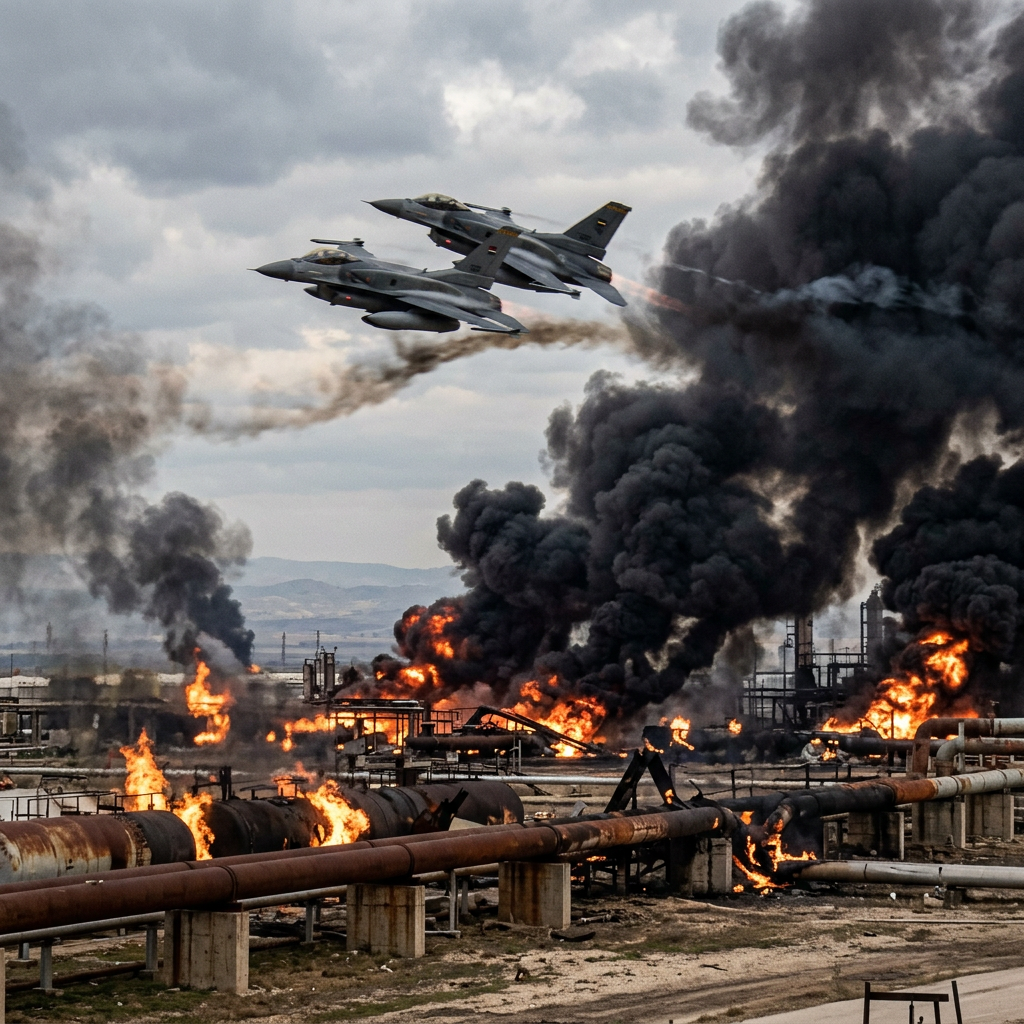
Nobody serious believes this was about protecting civilians. The moment Gaddafi’s forces were approaching Benghazi and were days away from ending the insurgency, NATO intervened. Not to protect a population. To save a failing rebel movement that couldn’t win on its own.
The real agenda was sitting in Libya’s central bank and its oil fields. The $150 billion in sovereign wealth was frozen within days of the intervention beginning, frozen by the very governments claiming to liberate Libyans. Gaddafi’s gold Dinar project died with him. Libya’s oil came under the management of governments and companies far friendlier to Western interests. And the man who had spent decades building African financial independence was put in the ground.
France wanted the oil contracts. Britain wanted the reconstruction deals. America wanted the strategic geography and the elimination of an independent voice in African geopolitics. It was a transaction. Libya was the price.
What They Left Behind
Go look at Libya now. Seriously. Go look at it.
Two governments. Neither controls the full country. Armed militias running detention centers where migrants, including children, are tortured, sold into forced labor, and sexually assaulted. This is documented. Human Rights Watch published it. The Mediterranean has become a graveyard for Africans fleeing the chaos that Western bombs and Gulf money created. Thousands drowned. Slave markets operated openly in 2017 in the country that fourteen years earlier had Africa’s highest living standards.
This is liberation. This is what the Arab League endorsed. This is what Qatar armed. This is what Saudi silence enabled.
The country didn’t just fail. It was deliberately dismantled and then abandoned, because the people who destroyed it never had to live in the wreckage.
And Then the Karma Arrived
I want to talk about what happened next. Because the Arab states that stabbed Gaddafi in the back did not walk away clean. They never do.
Saudi Arabia, drunk on its own power and convinced by American assurances, launched a war against Yemen in 2015. They were told it would take weeks. They’re still there. Yemen has become Saudi Arabia’s Libya, a bottomless pit of money, credibility, and human suffering with no exit and no victory. The same logic. The same arrogance. The same catastrophic miscalculation.
Qatar armed Libyan Islamists, funded Syrian rebels, and played geopolitical chess across the region. Then in 2017 its Gulf neighbors blockaded it. The country that spent years destabilizing everyone else suddenly found itself isolated, accused of terrorism, and scrambling for survival. It was almost poetic.
Egypt backed the Libyan intervention and then spent years trying to manage the militia chaos on its western border. Today Egypt’s economy is in freefall, the IMF owns large parts of its financial decisions, the Sinai insurgency bleeds on, and the Grand Renaissance Dam in Ethiopia threatens the Nile water supply that Egyptian civilization depends on. Cairo helped bury a stable neighbor and got permanent instability in return.
The UAE is simultaneously entangled in Libya, Yemen, Sudan, and Somalia. It has more foreign military operations running than most people realize, and none of them are going cleanly.
And then there is Gaza. There is always Gaza, eventually.
The Arab states that normalized with Israel, that quietly realigned themselves with Western power, that calculated that Palestinian suffering was a price worth paying for their own security, they are now watching their own populations turn against them in real time. The streets don’t forget. The people watching their leaders shake hands in Washington while Gaza burns, they are filing it away. Every image. Every statement. Every silence.
Neither America nor NATO can protect these regimes from their own people forever. American credibility in the region is finished. Afghanistan broke the myth of Western military invincibility. Syria broke the myth of Western strategic coherence. Gaza broke whatever moral authority remained.
The Arab rulers who bet their survival on Washington’s guarantee are discovering, slowly and painfully, that the guarantee has an expiry date
He Told Them
Gaddafi said it for four decades. The West is not your partner. It is your predator. The moment you stop being useful, you become the target. Arab governments that serve imperial interests are not allies of empire, they are its tools.
They laughed at him. They called him unstable. They pointed at his Green Book and his Bedouin tent and his all-female bodyguard and dismissed everything he said.
But look at the map today. Every country he named, Yugoslavia, Afghanistan, Iraq, Libya, Syria, is either destroyed, occupied, or permanently destabilized. The pattern he described has repeated with mechanical precision. And now the Arab states that helped execute that pattern are discovering they were never exempt from it. They just hadn’t been scheduled yet.
The Bill Always Comes
October 20, 2011 was not just the day Muammar Gaddafi was murdered. It was the day the Arab world’s last genuinely independent voice was silenced, with Arab hands on the weapon.
What replaced him was not democracy. Not development. Not dignity. It was chaos, slavery, and a Mediterranean cemetery.
The Arab states that made that possible are not living in comfort and security today. They are managing crises on every front, hemorrhaging money into unwinnable wars, sitting on top of populations whose patience is running out, and discovering that the Western powers they served have limited interest in their survival once the utility relationship ends.
Gaddafi’s Libya was not perfect. He was not a saint. But he was building something real in a region where most leaders build nothing except their own bank accounts and their children’s futures abroad.
They destroyed it. They destroyed him. And the world they created in his absence is the world they now have to live in.
The bill always comes. It just sometimes takes a few years to arrive.
Agree? Disagree? Think I’ve missed something? Drop it in the comments. This conversation needs to happen.
Leave a Reply