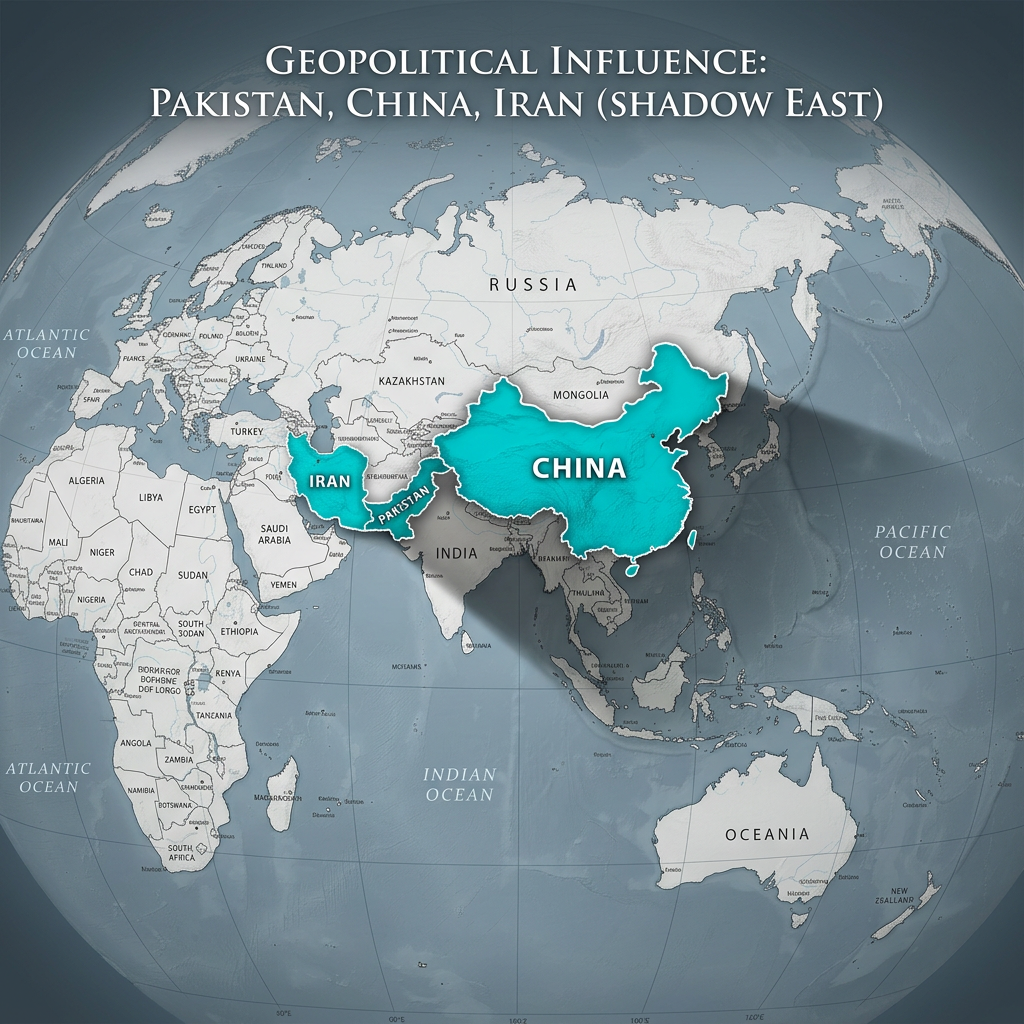
The China role in Pakistan mediation is the part nobody says out loud, at least not in the headlines.
You read that Pakistan is hosting talks. You hear that Islamabad is bridging Washington and Tehran. It sounds clean. Almost reassuring.
But if you sit with the story a little longer, something feels… incomplete.
Pakistan is speaking. Yes. But is it really the one being heard?
China Role in Pakistan Mediation: Influence Without Visibility
Pakistan’s diplomatic position looks impressive. It talks to the United States, keeps channels open with Iran, and maintains ties with Gulf states and Turkey.
That kind of access is rare.
Still, access is not the same as influence. That distinction matters more than we admit.
This is where China quietly enters the frame. Not with statements or press briefings. Just presence.
China is Iran’s largest trading partner. It has committed long-term investments worth around $400 billion under a 25-year cooperation deal. That is not symbolic. That is structural leverage.
So when Pakistan carries a message to Tehran, the real question is simple.
Who does Tehran need more?
The Mediation That Looks Larger Than It Is
Pakistan appears central. Meetings happen in Islamabad. Officials travel. Statements are released.
From the outside, it looks like leadership.
But diplomacy is not theatre. It runs on pressure, incentives, and dependency.
Pakistan cannot pressure Iran economically. It cannot shield it from sanctions. It cannot offer guarantees that change Iran’s strategic calculus.
China can influence those calculations. Not completely. But enough.
So Pakistan becomes the visible channel. China becomes the quiet weight behind that channel.
I might be oversimplifying it. Or maybe that is exactly how layered diplomacy works now.
How the Pieces Actually Move
Look at how recent efforts unfolded.
Pakistan coordinated proposals. Then China signaled support. Not loudly, but clearly enough for those who matter.
That order is not accidental.
Iran’s economy is constrained. Sanctions limit its options. Energy exports depend on a narrow set of partners. In that environment, China is not just another country. It is a lifeline.
So when Beijing leans, even slightly, Tehran listens.
Pakistan alone could not create that moment.
Why China Prefers the Background
China’s interests are straightforward. Stability in the Middle East protects its energy routes and trade flows. Conflict raises costs and uncertainty.
At the same time, China avoids stepping into the spotlight in volatile conflicts.
So it lets Pakistan lead publicly.
Pakistan hosts talks. Pakistan absorbs scrutiny. Pakistan manages expectations.
China shapes the environment quietly.
Efficient, yes. Also calculated.
The Risk Pakistan Carries
This arrangement brings visibility to Pakistan. It changes perception. It places Islamabad at the center of a global conversation.
That is not a small shift.
But there is a risk embedded in it.
If mediation works, Pakistan gets credit. If it fails, Pakistan gets questioned. China remains largely untouched either way.
That imbalance sits in the background, easy to miss.
There is another layer too. The more Pakistan aligns with Chinese-backed diplomacy, the harder it becomes to step away if interests diverge later.
And they often do.
A Moment That Feels Bigger Than It Is
In conversations here in Karachi, people talk about Pakistan’s rising diplomatic importance. There is a sense of pride in that.
I get it.
For years, the narrative around Pakistan has been narrow. Security issues. Instability. Suspicion.
Now the language is different. Mediation. Facilitation. Influence.
Still, something about the celebration feels a bit ahead of reality.
Because influence is not just about being present. It is about being decisive.
And that part remains uncertain.
Conclusion
Pakistan’s role in these talks is real. It is active, visible, and, in moments, impressive.
But the China role in Pakistan mediation tells a quieter story. One where influence is layered, not declared. Shared, but not equally.
Maybe this is how power works now. Not through loud control, but through silent alignment.
Or maybe we are just seeing what we want to see.
I am not entirely sure.
AI transparency: This op-ed was developed with AI assistance and refined through human analysis, lived observation, and editorial judgment.
Leave a Reply